13.8B Light-Years · CMB · 380,000 yrs post-Big Bang · 2.725K Cosmic Microwave Background — The First Light Ever
The universe was opaque for its first 380,000 years. When it cooled to 3,000K, atoms formed and light escaped — we detect that glow today at 2.725K (redshifted by expansion). CMB temperature fluctuations of 1/100,000th of a degree are the seeds of all galaxies, clusters, and voids in existence.
Up to 10B Light-Years · The Cosmic Web The Cosmic Web — Superclusters Along Dark Matter Silk
Galaxies are strung along filaments of dark matter surrounding immense voids up to 300 million light-years across. The Hercules-Corona Borealis Great Wall is the largest known structure: 10 billion light-years across (10% of the entire observable universe).
520M Light-Years · Laniakea Supercluster Laniakea — 100,000 Galaxies Flowing to the Great Attractor
Laniakea means 'immeasurable heaven' in Hawaiian. Mass of 10¹⁷ Suns. Galaxies inside are flowing like rivers toward the Great Attractor, a massive gravitational anomaly hidden behind the Milky Way's dust that has never been directly observed.
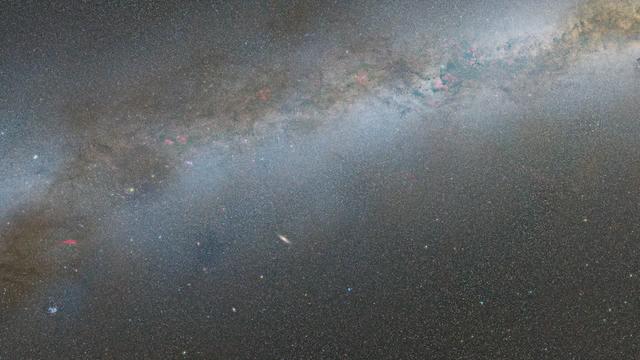
2.537M Light-Years · Light: 2.54M years Andromeda Galaxy — Hurtling Toward Us at 110 km/s
Contains 1 trillion stars (2× the Milky Way). In 4.5 billion years, it will collide with our galaxy to form a giant elliptical galaxy ('Milkomeda'). Night skies on Earth will be filled with merged stars — but the Sun and Earth will survive untouched due to empty interstellar space.
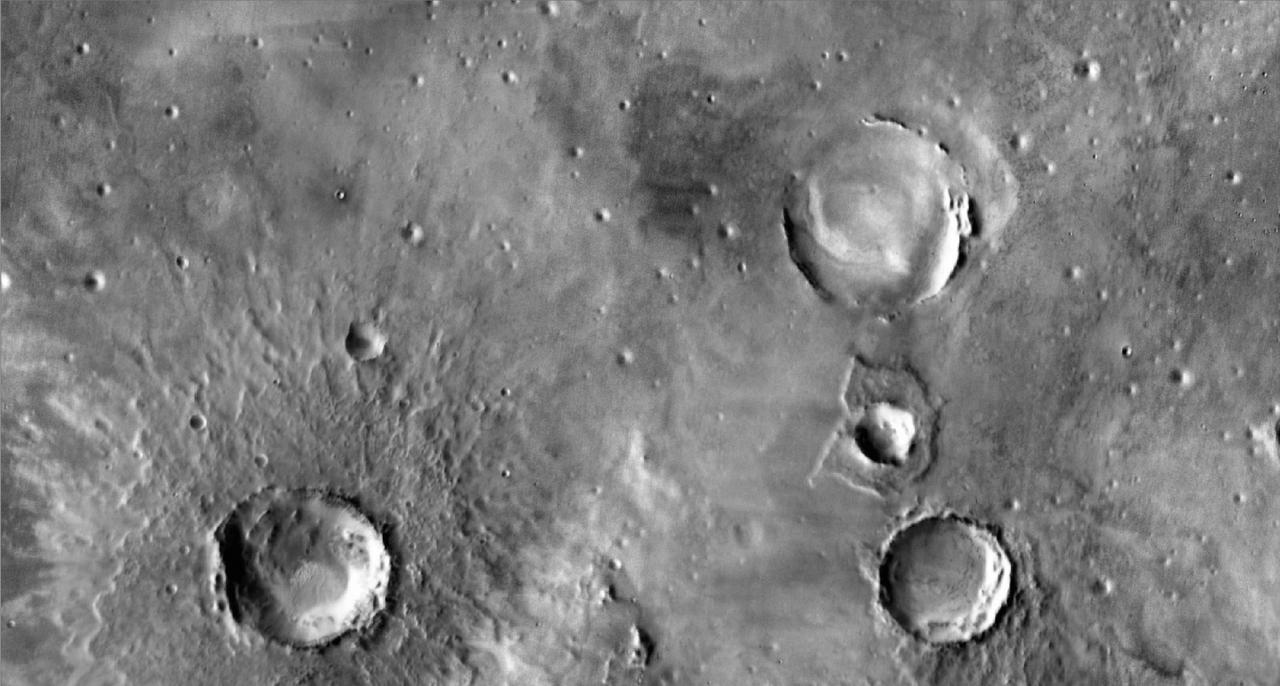
~100,000 ly Across · 100–400B Stars Milky Way — Barred Spiral with 400 Billion Stars
We orbit the galactic core in the Orion-Cygnus arm at 828,000 km/h. One Galactic Year takes 230 million years — dinosaurs first walked the Earth just one cosmic season ago. Over 100+ billion exoplanets exist in our galaxy alone.
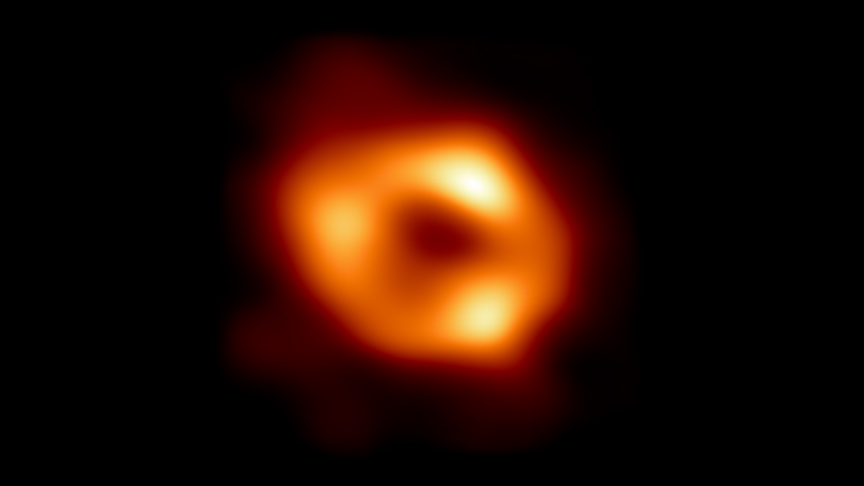
26,000 ly · 4.3M Solar Masses · EHT 2022 Sagittarius A* — Milky Way's Central Black Hole
Directly imaged in 2022 by the global Event Horizon Telescope. The glowing orange ring is superheated plasma orbiting at near light-speed around the pitch-black central shadow of the event horizon. Stars whip around it at up to 24 million km/h.
4.246 Light-Years · 40.17 Trillion km Proxima Centauri — Nearest Star & Earth-Sized Proxima b
Nearest star to Earth. Host to Proxima b, an Earth-mass planet in the habitable zone. Breakthrough Starshot plans to send microchip laser-sail probes at 20% the speed of light, arriving in 20 years to photograph the planet close-up.
NASA JPL LIVE TELEMETRY INTERSTELLAR SPACE
Voyager 1 — Most Distant Human Creation
Distance Earth (Live)
166.040 AU
24,840,000,000.0 km
Speed vs Sun
38,026 mph
17.0 km/s · 61,200 km/h
One-Way Light Time (Live)
23h 01m 20s
Live Odometer · Moving Away
Launched Sept 5, 1977. Powered by plutonium RTGs, communicating daily via NASA Deep Space Network. Carries the Golden Record containing greetings in 55 languages and music of Earth.
NASA JPL LIVE TELEMETRY INTERSTELLAR SPACE
Voyager 2 — The Grand Tour Navigator
Distance Earth (Live)
138.570 AU
20,730,000,000.0 km
Speed vs Sun
34,390 mph
15.4 km/s · 55,340 km/h
One-Way Light Time (Live)
19h 12m 45s
Live Odometer · Moving Away
Launched Aug 20, 1977. The only spacecraft in human history to fly past Uranus (1986) and Neptune (1989), revealing active geysers on moon Triton.
30–50 AU · Kuiper Belt · avg 5.9B km 0.18× EARTH (2,376 KM)
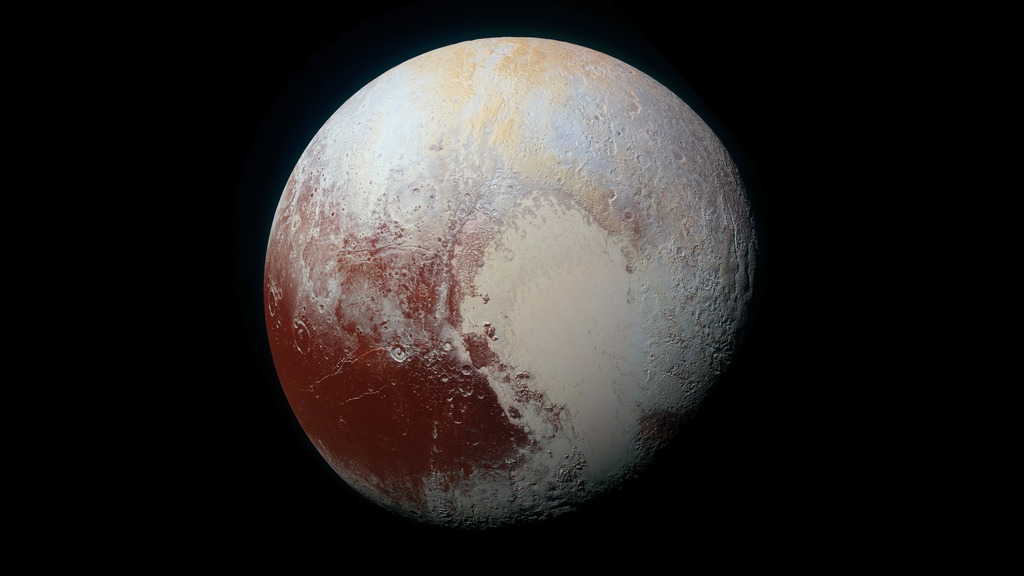
Pluto & The Kuiper Belt — Heart of Nitrogen Ice
Pluto is the largest and most famous resident of the Kuiper Belt — a vast disc of frozen debris left over from the solar system's birth. Pluto shares a 2:3 orbital resonance with Neptune as a "Plutino," anchoring a realm of dwarf planets including Haumea, Makemake, and Arrokoth. Sputnik Planitia flows with active nitrogen glaciers beneath 3.5km ice mountains.
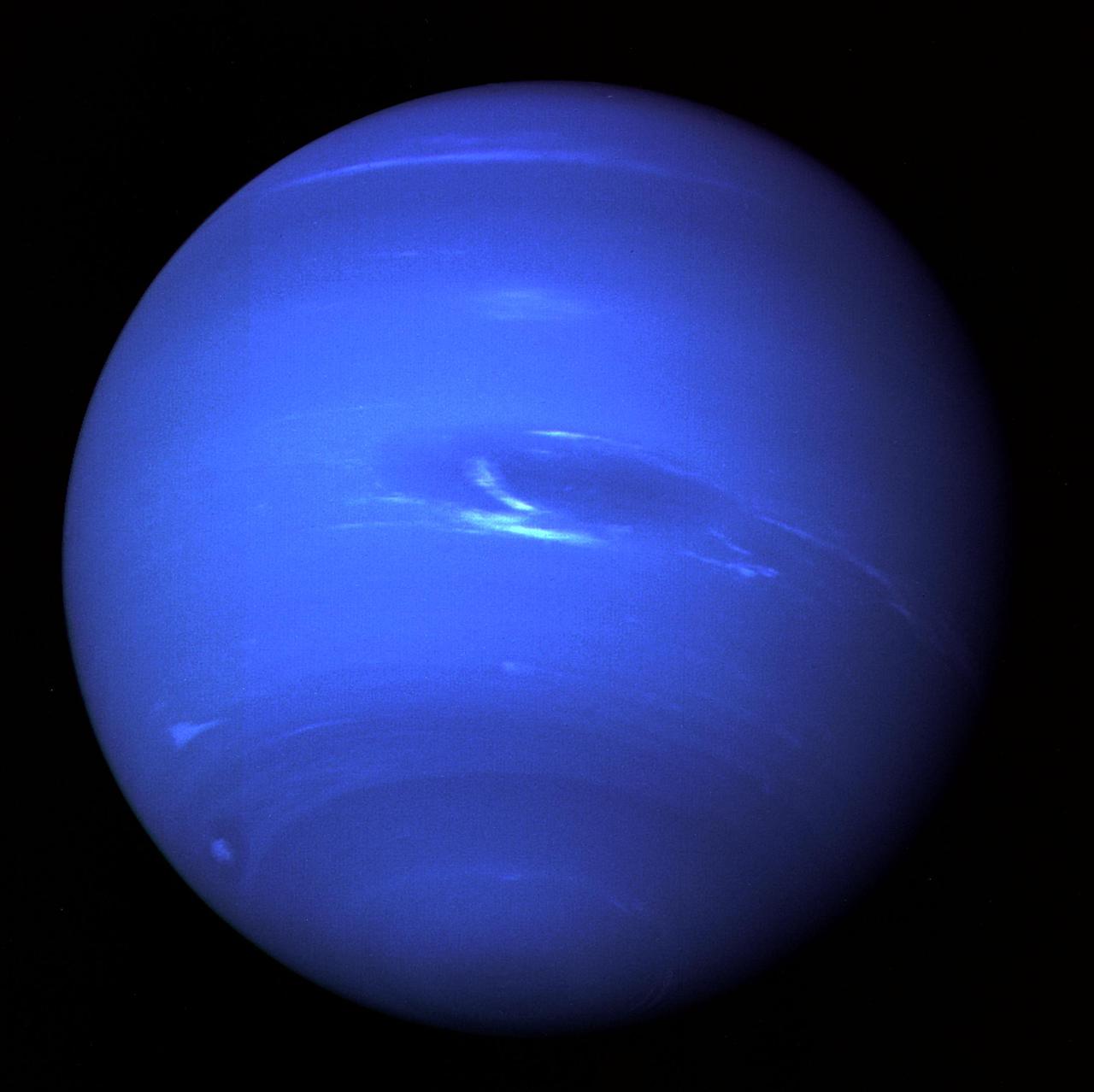
Neptune: avg 4.5B km · 30 AU3.9× EARTH DIAMETER Neptune — Predicted by Math Before It Was Seen
Discovered in 1846 exactly where equations predicted (only 1° off). Winds reach 2,100 km/h. Triton (a captured KBO) orbits backwards and will be torn into rings in 350M years. Visited only once — by Voyager 2 in 1989.
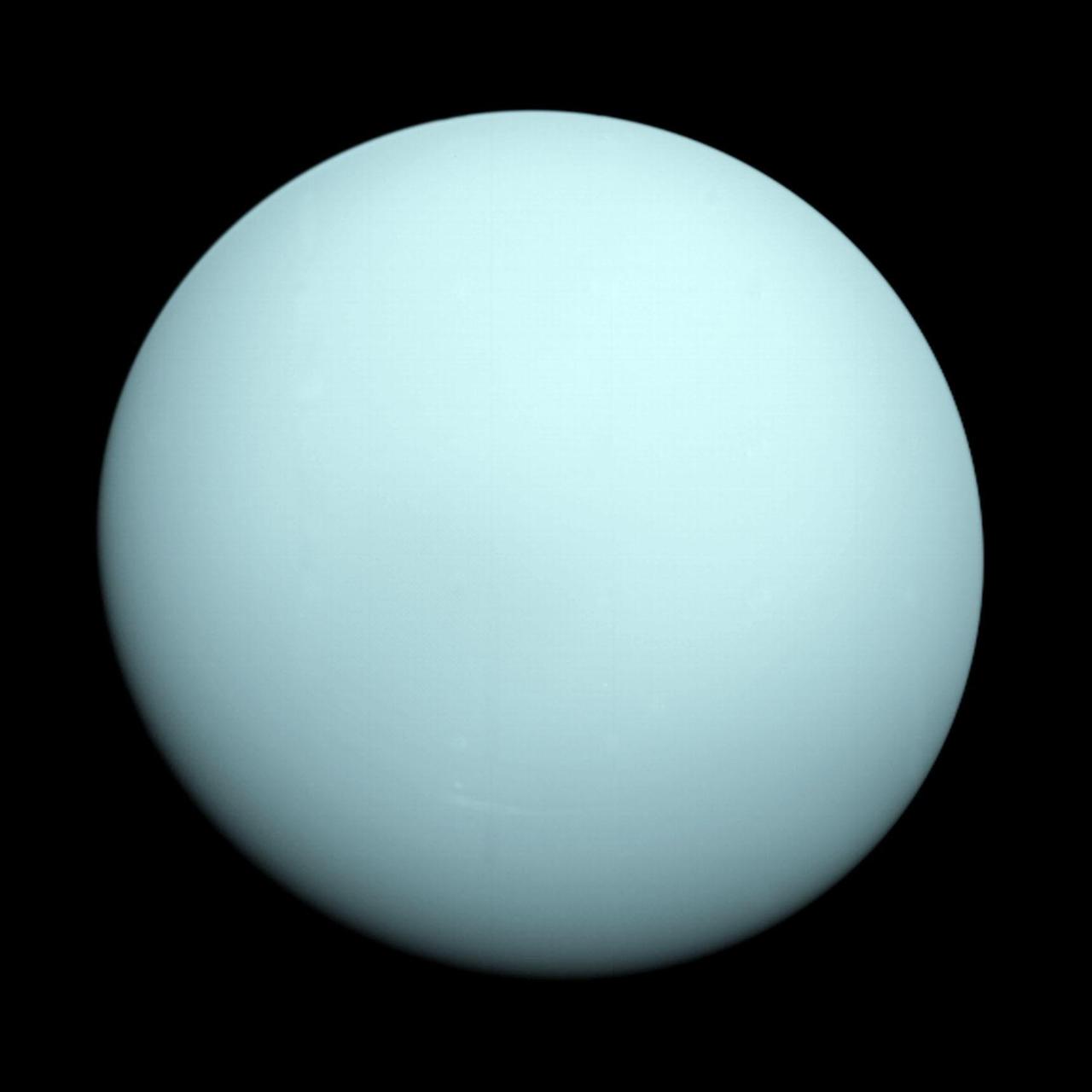
Uranus: avg 2.87B km · 19.2 AU · Light: 2.7 hr Uranus — Orbiting on Its Side, Coldest Planet (-224°C)
98° axial tilt means it rolls around the Sun like a ball. Each pole gets 42 years of continuous sun then 42 years of darkness. Coldest planet at -224°C despite Neptune being farther away.
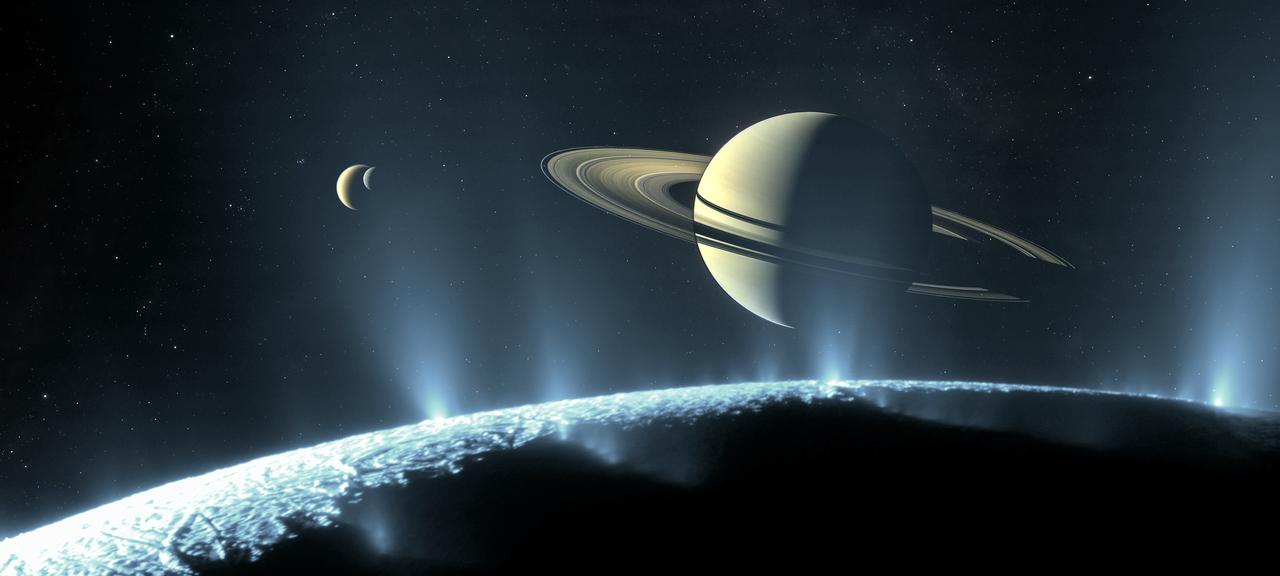
Saturn: avg 1.43B km · 9.5 AU · Light: 1.3 hr9.5× EARTH DIAMETER Saturn — Rings Thinner Than a Sheet of Paper
Rings span 282,000km but are only 10–100m thick — disappearing at 10,000kg/s, gone in 100M years. Moon Titan has thick nitrogen air and liquid surface lakes (methane & ethane at -179°C). NASA's Dragonfly rotorcraft lands in 2034.
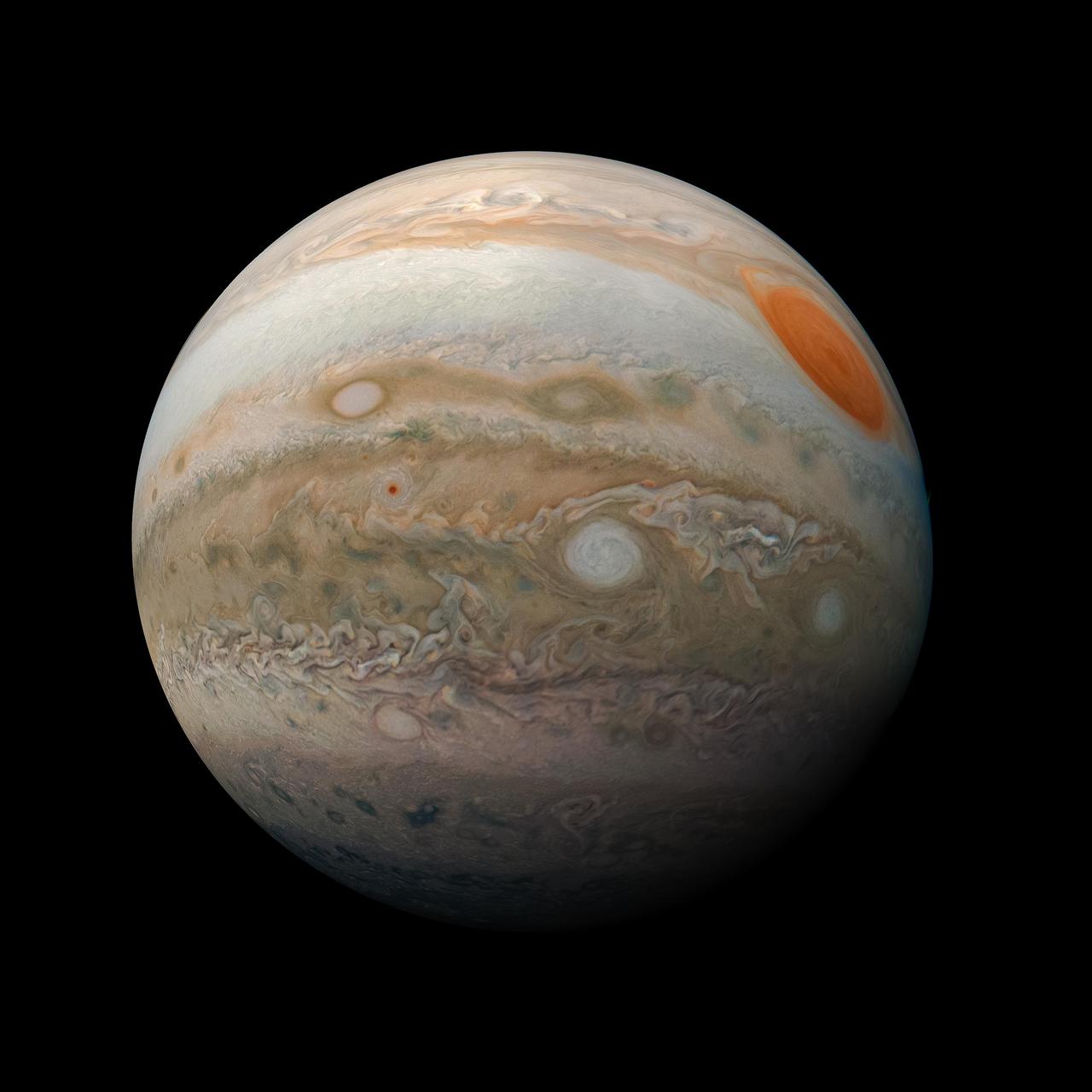
Jupiter: avg 778M km · 5.2 AU · Light: 43 min11.2× EARTH DIAMETER · LARGEST PLANET Jupiter — 1,300 Earths Could Fit Inside
The Great Red Spot (350+ year storm) and turbulent cloud belts captured by NASA's Juno probe. 95 known moons — Io is the most volcanically active body in the solar system; Europa holds an ocean under ice with 2× Earth's water.
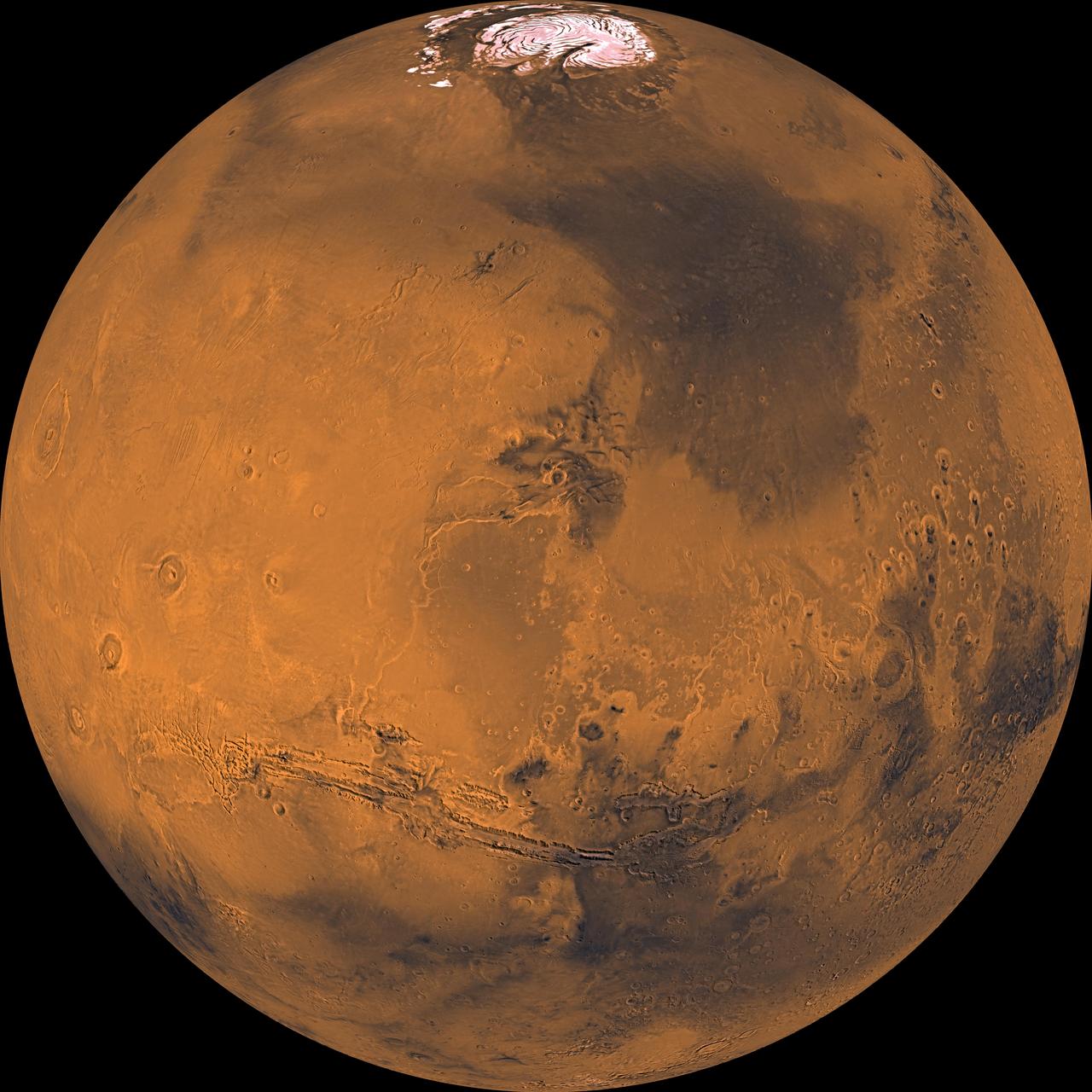
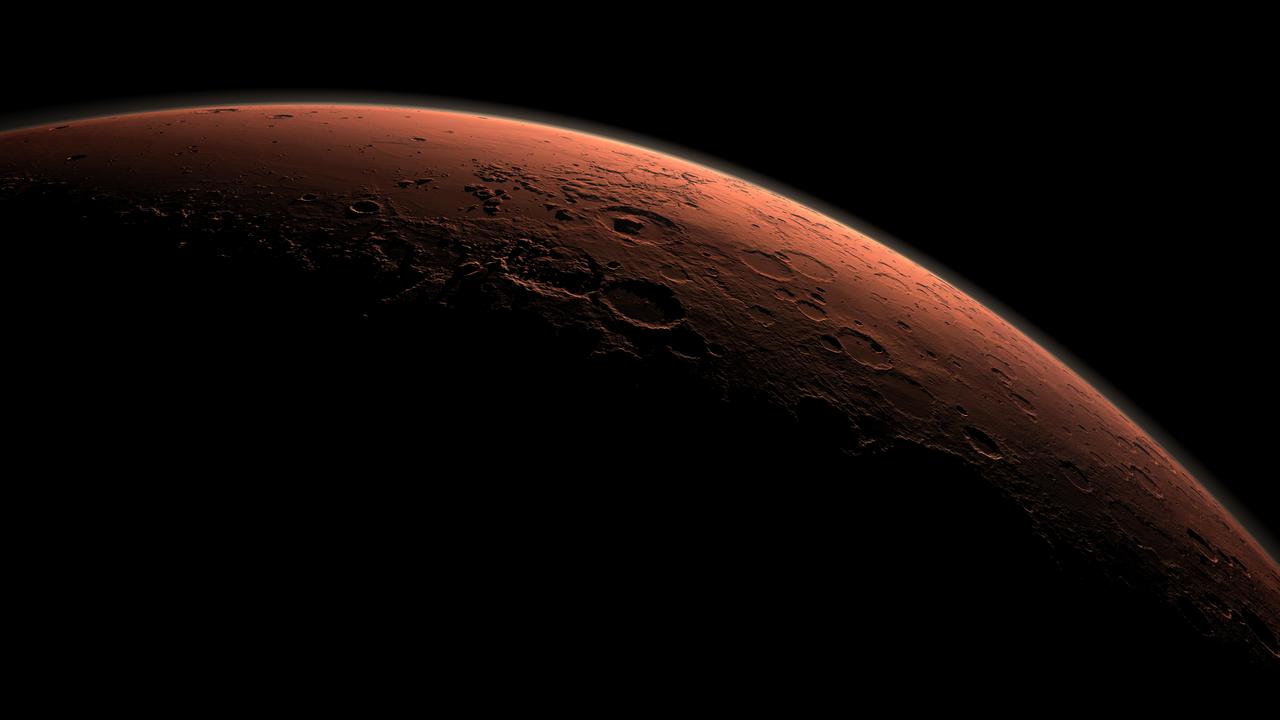
Mars: avg 225M km0.53× EARTH DIAMETER Mars — Half the Size of Earth, Perseverance Drills for Life
Olympus Mons: 21.9km tall, 600km wide. Valles Marineris: as wide as the USA. Perseverance rover collected 23 rock cores from ancient lake Jezero. Ingenuity completed 72 powered flights. Liquid water flowed 3.5 billion years ago.
149.6M km · 1 AU · Light: 8 min 20 s 109× EARTH DIAMETER · 99.8% SYSTEM MASS
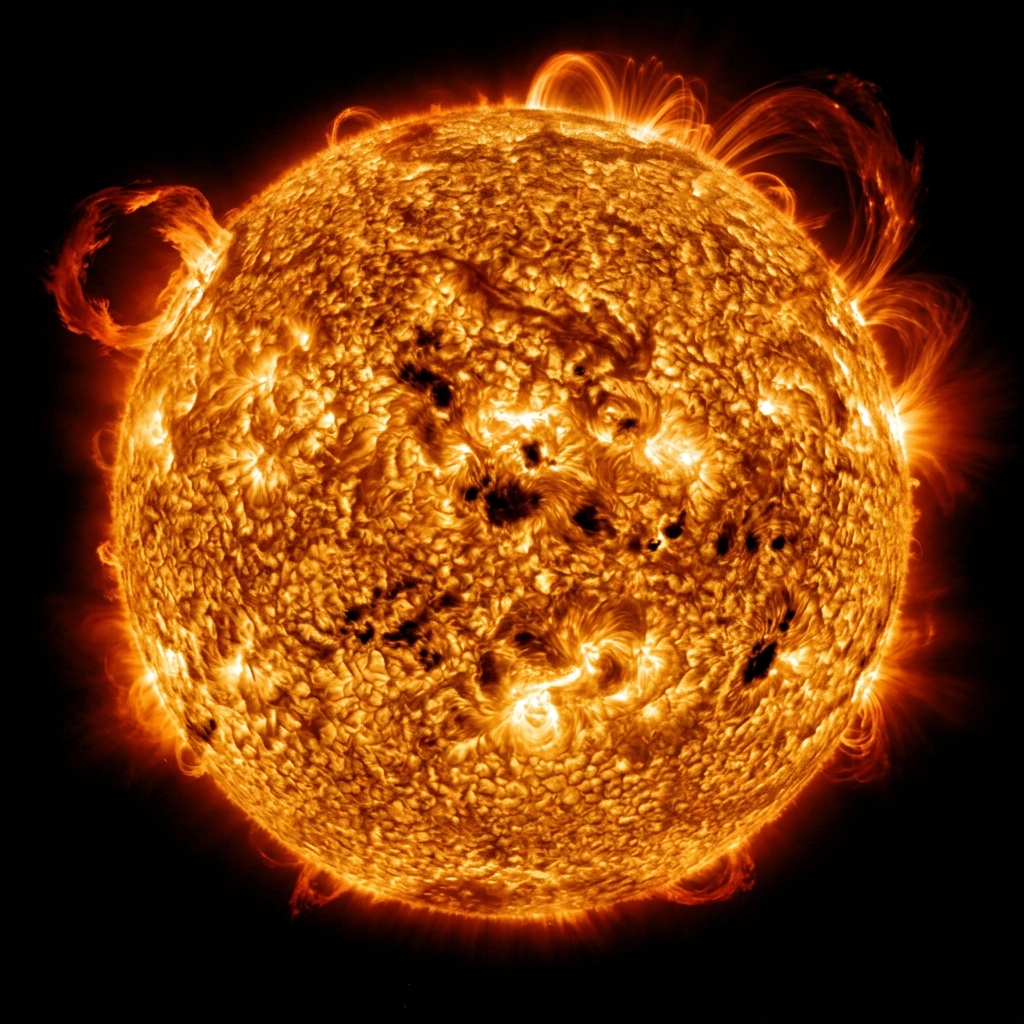
The Sun — 99.8% of the Solar System's Mass
Surface temp: 5,500°C · Core temp: 15,000,000°C. 1.3 million Earths could fit inside. Fuses 600 million tonnes of hydrogen per second into pure energy. Extreme ultraviolet photograph from NASA's Solar Dynamics Observatory showing active coronal loops and solar flares.
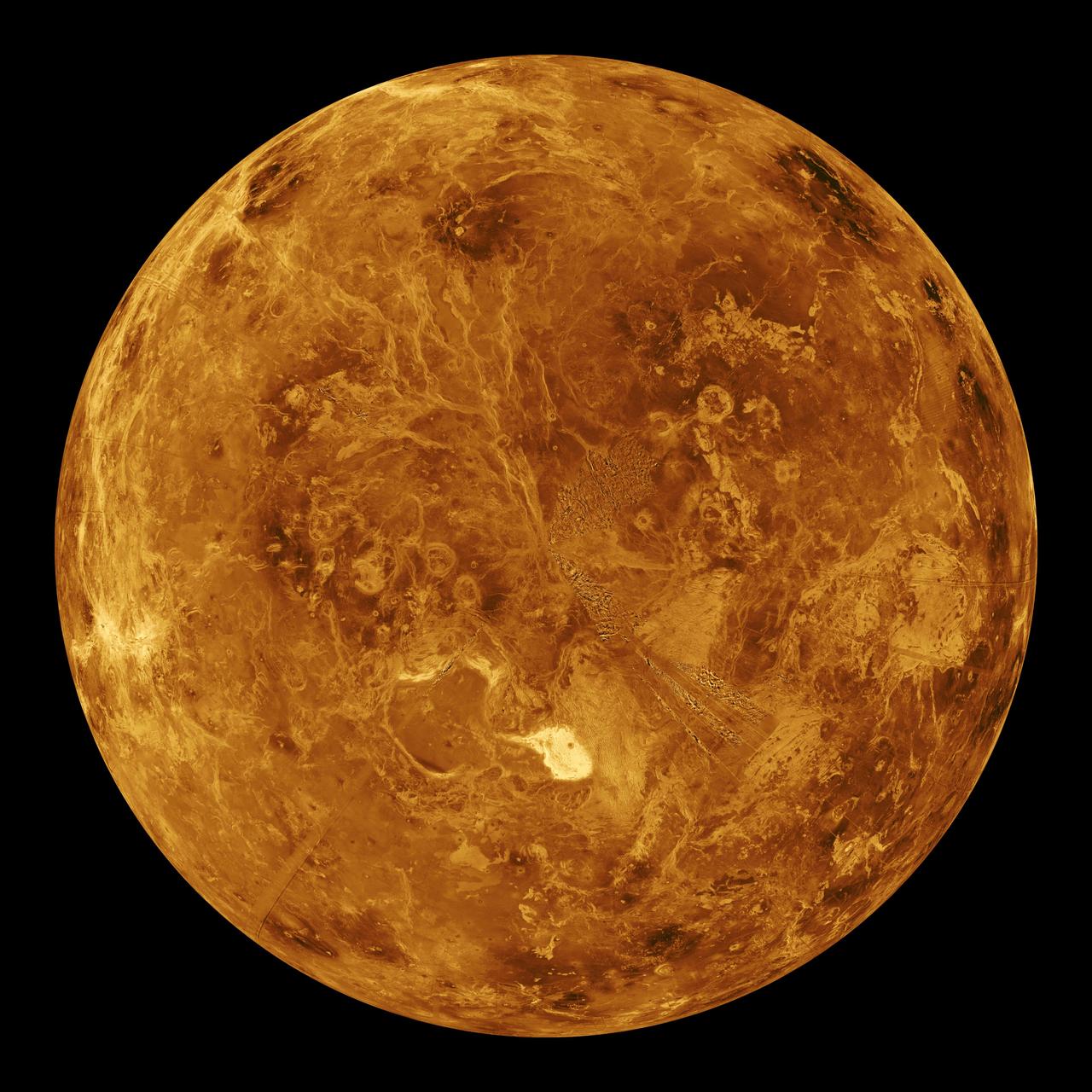
Venus: avg 261M km · Light: 2–15 min Venus — 462°C Runaway Greenhouse & Lead-Melting Rain
Near twin to Earth in diameter (95% of Earth). 92× Earth's atmospheric pressure. Sulfuric acid clouds rain metal vapors. Day longer than its year. Soviet Venera probes survived 23–127 minutes.
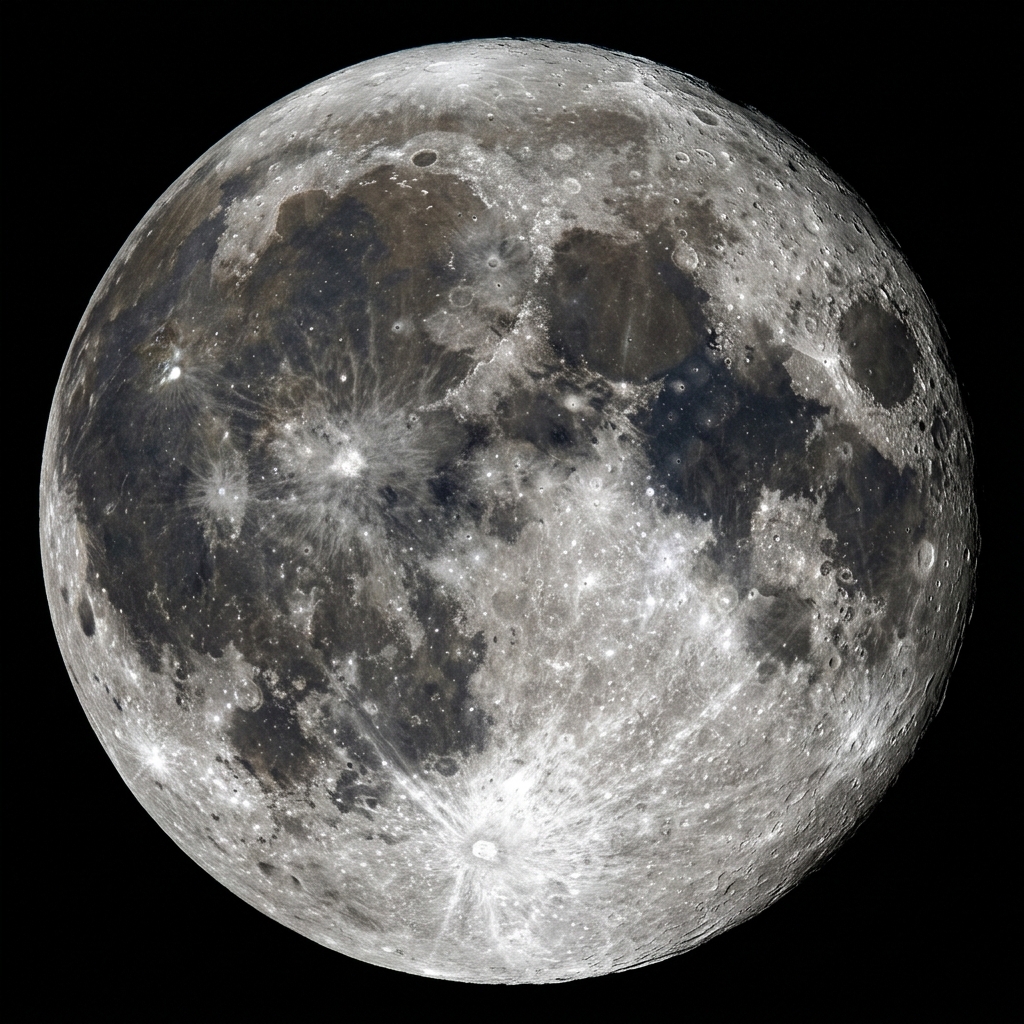
384,400 km0.27× EARTH DIAMETER The Moon — 1/4th Earth's Size, 12 Humans Walked Here
High-resolution NASA LRO mosaic showing impact craters and basaltic maria. Without the Moon's tidal stabilization, Earth's axial tilt would swing 0°–85° chaotically — seasons would become catastrophic. Artemis returns humans by 2026.
408 km · Light: 1.4 ms · 28,000 km/h International Space Station — 16 Sunrises Per Day
Built across 37 flights. Completes one orbit every 92 minutes at 28,000 km/h. Astronauts age 0.007s slower per 6-month mission due to gravitational time dilation. Visible to the naked eye at dusk.